Culture & food
Wazwan: Kashmir’s feast, its dishes and how it is served
Kashmir’s wazwan feast from official, dated sources: the seven core dishes, how the trami is served and shared, vegetarian options, prices and where to try it.

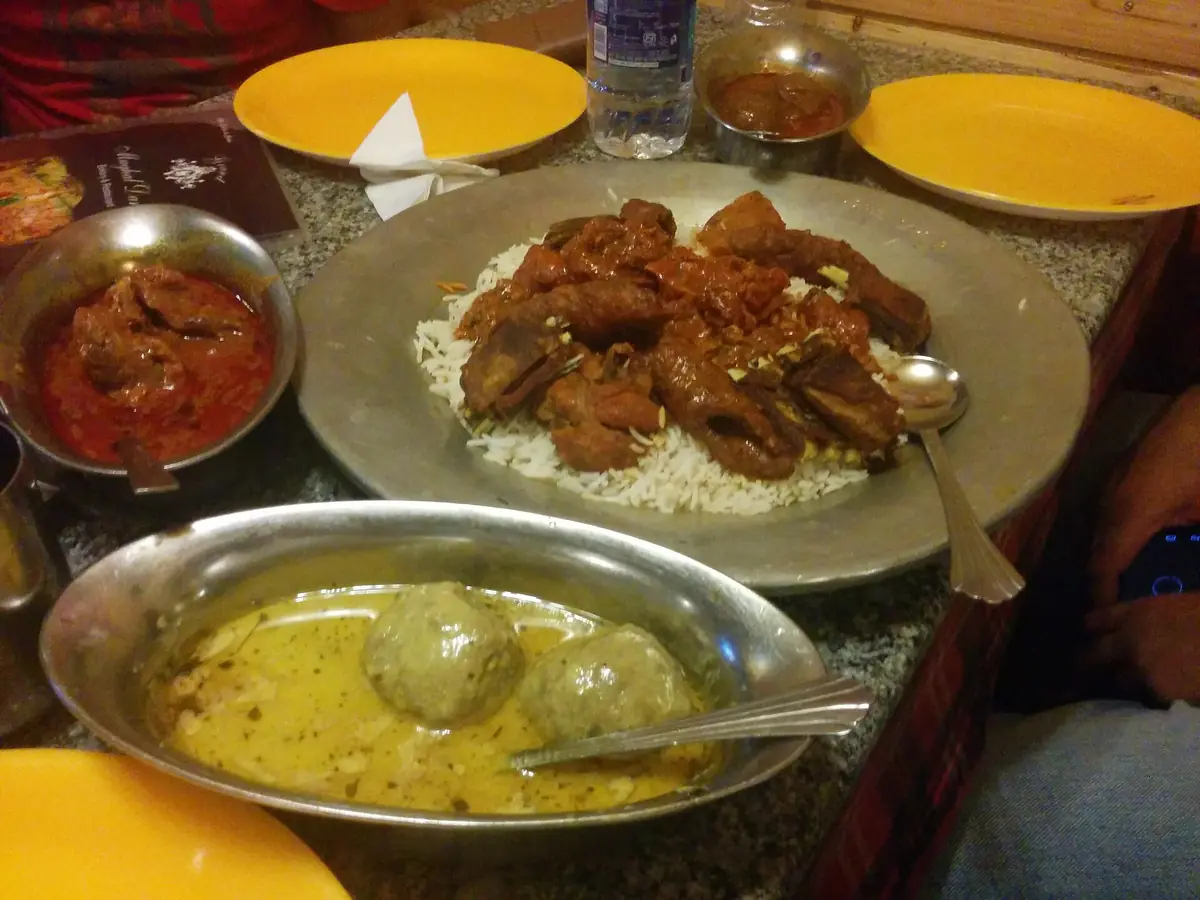
Wazwan is Kashmir’s formal multi-course feast: mostly mutton, cooked by professional cooks called wazas and served at weddings on a large copper platter, the trami, that four guests share. The Budgam district administration names seven dishes as “a must”: tabakh maaz, rista, rogan josh, daniwal korma, aab gosh, marchhwangan korma and gushtaba, the large meatball that ends the main course. It is almost all meat, “with few vegetarian dishes”. We found no official price; on 23 October 2026 one Srinagar restaurant’s website listed a wazwan plate for one at ₹1,300 and a full trami for four at ₹6,200.
In this guide10 sections
At a glance
- What it is
- A multi-course feast, mostly mutton served at weddings
- Core dishes
- Seven Budgam district list
- Served on
- A copper trami shared by four
- Last savoury dish
- Gushtaba
- Vegetarian?
- Few dishes such as haakh and chaman
- Restaurant price
- ₹1,300 for one, ₹6,200 for four one Srinagar menu, 23 Oct 2026
What is wazwan?
Wazwan is “a multi-course meal in Kashmiri cuisine, the preparation of which is considered an art and a point of pride in Kashmiri culture and identity”, in the words of the Budgam district administration. In Kashmiri, waz means “cook” or “cooking” and wan means “shop”, the district site says. The cooks are wazas, led by a head cook it calls the vaste waze.
How many dishes it has depends on who you ask:
- 36 courses for the “royal wazwan”, “between fifteen and thirty” of them meat, say the Budgam site and JKTDC.
- 12 to 24 dishes today, grown from “a seven-dish meal”, according to Sahapedia.
- Around 20: “There were only seven mutton dishes at that time. Over the centuries we added more, and now there are around 20,” a veteran wazwan chef, 74-year-old Ghulam Nabi Baba, told Reuters in September 2026, as published by Al Jazeera.
Where it came from. The feast “arrived in the valley from Central Asia in the 14th century, when rulers brought skilled chefs along with the carpet and shawl weavers”, Reuters reported. JKTDC says the wazas “claim to be the descendants of the master chefs who migrated from Samarkand and parts of Central Asia at the beginning of the fifteenth century”, in the time of Timur; Incredible India puts the cooks’ arrival from Samarkand in 1398. Today the feast is “both a marker of social status and a powerful symbol of Kashmiri identity”, Reuters wrote.
Two kitchens. JKTDC says there were “two great schools of culinary craftsmanship in Kashmir, namely those of Kashmiri Pandits and Kashmiri Muslims”, the first marked by heeng (asafoetida) and curd, the second by onions and garlic. It calls wazwan “the traditional Kashmiri Muslim banquet”.
What are the 7 dishes of Kashmiri wazwan?
“Seven dishes are a must for these occasions,” says the Budgam district site. They are:
| Dish | What it is |
|---|---|
| Tabakh maaz | “Twice-cooked lamb ribs, initially braised with ground spices and milk, then browned in butter” |
| Rista | Meatballs “in a red, paprika-saffron-fennel spice gravy” |
| Rogan josh | Mutton simmered in a gravy of garlic, ginger, red chilli, whole spices and shallot paste; the name joins “rogan” (fat) and “josh” (to cook on high heat) |
| Daniwal korma | “Lamb roasted with yoghurt, spices and onion puree, topped with coriander leaves” |
| Aab gosh | “Lamb chunks cooked with a fennel-based spice mixture, cardamom and partially evaporated milk” |
| Marchhwangan korma | The chilli korma, said to use “three-quarters of the chilies found in the entire Wazwan” |
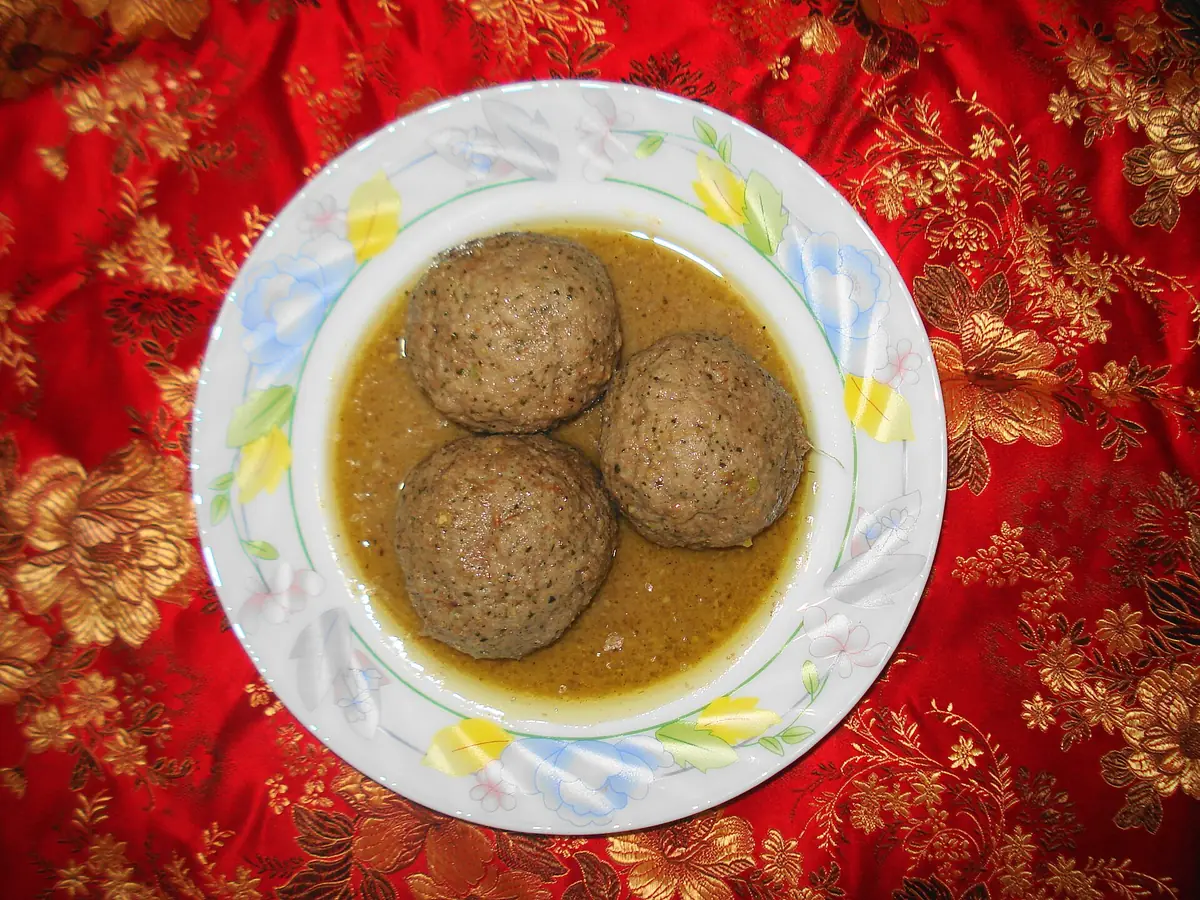
| Gushtaba | Large meatballs “cooked in a spicy yoghurt gravy”; it ends the main course |
Descriptions are the Budgam district site’s, except rogan josh (from Sahapedia and Incredible India) and the chilli line (Incredible India). The Budgam site describes marchhwangan korma as “chicken legs/thighs cooked in a spicy browned-onion sauce”. Aab gosh is also written aab gosht.
Two of the seven have been put forward for a geographical indication (GI) tag: The Kashmir Wazwan Cooperative Limited filed applications for “Tabakmaaz (Meat Products) of Kashmir” and “Goshtaba (Meat Products) of Kashmir” on 8 August 2024, and on 24 October 2026 India’s GI registry listed both at “Pre Examination”.
What else is on the trami?
Beyond the seven, these are named by the Budgam district site and Incredible India’s wazwan guide:
- Seekh kababs: each trami arrives “quartered by two seekh kababs”, says the Budgam site.
- Methi maaz or methi korma: flavoured with dried fenugreek. Incredible India describes “minced sheep tripe”; the Budgam site says chicken or mutton.
- Safed kokur and zafran kokur: chicken “with white sauce” and “with saffron sauce”.
- Lahabi kabab: “a diamond-shaped kabab made from minced lamb meat”, also called moche kabab.
- Waza palak: spinach with small mutton balls, so not a vegetarian dish.
- Sabz haakh: leafy greens “cooked in mustard oil with a touch of chili”, which Incredible India calls “indispensable”.
- Ruangan chaman: paneer in “a luscious gravy made from tomatoes and milk”.
- Chutneys and yoghurt: such as doon chetin, “a walnut chutney flavored with yogurt and chilies”. Yoghurt and chutney “are served separately in small earthen pots”, says the Budgam site.
- Modur pulao: a sweet rice with saffron, cinnamon, milk, ghee and dry fruits.
- Dessert: “In winters, the dessert can be a hot sweet dish and in summers, it is usually something cold,” according to the Budgam site.
Kahwa, a green tea with cinnamon, cardamom and saffron, is “a warm conclusion to a Kashmiri feast”, writes Sahapedia.
How is wazwan served?
This is the order the Budgam district site describes for a formal wazwan:
- Seating: guests sit “in groups of four and share the meal out of a large copper platter called the traem”. Incredible India says the platter is set “atop a pristine white sheet”.
- A blessing and hand-washing: the meal begins with an invocation and “a ritual washing of hands in a basin called the Tash-t-naer, which is taken around by attendants”.
- The trami arrives “heaped with rice, quartered by two seekh kababs”, with four pieces of methi korma, two tabak maaz, one safed kokur, one zafran kokur “and the first few courses”.
- The wazas serve the rest: “up to about 20 items are served thereafter”. Each dish comes one at a time, Anadolu Agency reported in December 2024.
- Gushtaba closes the main course. It “signals the end of the main course. After that, desserts are served.”
Wazwan table customs
- One platter, four people. Sharing from the same plate symbolises “the bond of love and togetherness”, says Incredible India.
- By hand. “Traditionally, no spoons, forks or knives are used for eating food. Eaten with fingers,” says JKTDC.
- Portions are counted. The traditional presentation “allocates one rista per person around the trami”, and a single gushtaba of 200 to 400 grams “serves four people”, with “the eldest diner” portioning it among the group, according to Sahapedia.
- Leftovers go home. The custom “concludes with guests receiving designated bags of leftovers”, Sahapedia writes. Each person is now given “two sets of bags”, Anadolu reported.
How is wazwan cooked?
- Over wood fires, in copper pots. Wazwan is cooked in large copper cauldrons, daigs, “using dry wood from fruit trees like apple, walnut or plum”, according to Sahapedia. Reuters photographed wazas cooking in degchis “over a wood fire during a wedding”.
- Meat pounded by hand. For rista and gushtaba, wazas “pound meat with wooden mallets on stone slabs”, Reuters reported.
- Shallot paste. Pran, a shallot grown in Kashmir, “distinguishes wazwan from its Mughlai counterparts”, Sahapedia writes: “For every 100 kilograms of wazwan, 7 to 10 kilograms of pran paste is needed.”
- At a wedding’s scale. “Normally, at an average marriage we cook 200kg,” Ghulam Nabi Baba told Reuters. A wedding needing 200 to 300 kg of meat “demands 3–4 wazas with their assistants”, says Sahapedia.
- Who cooks. Baba’s forefathers settled in Srinagar’s old city “as part of a community of cooks known as Wazpora”, Reuters reported, and “some younger chefs have moved from wedding catering into restaurant work”.
When is the wedding season? One waza quoted by Sahapedia gives the wedding season as “from May to October”; another says “From May to November, we are always busy with work.” Restaurants serve wazwan outside weddings too (see below).
Is wazwan non-veg?
Yes. “Almost all the dishes are meat-based using lamb or chicken with few vegetarian dishes,” says the Budgam district site, and Reuters calls it “a multi-course mutton feast”. At weddings, wazas charge “nothing for the one or two seasonal vegetable dishes thrown in”, Anadolu reported.
The vegetarian dishes you may see with a wazwan are sabz haakh (greens) and ruangan chaman (paneer in tomato and milk gravy), both in Incredible India’s wazwan list. Sahapedia adds tamatar chaman, mushrooms, morels “for special occasions” and nadru yakhni, lotus stem in a yoghurt gravy, from Kashmir’s vegetarian home cooking. Waza palak has mutton balls in it. For vegetarian Kashmiri food beyond the feast, see Kashmiri food.
How much does wazwan cost?
We found no official or government price for a wazwan meal, so here is one dated example: Mughal Darbar on Residency Road, Srinagar, one of the restaurants Incredible India names, listed these on its website on 23 October 2026.
| On the menu | Listed price |
|---|---|
| Wazwan full plate, one person | ₹1,300 |
| Full wazwan trami, four people | ₹6,200 |
| Rista | ₹690 |
| Gushtaba | ₹690 |
| Rogan josh | ₹600 |
| Tabak maaz | ₹450 |
From Mughal Darbar’s wazwan menu, read 23 Oct 2026. The plate and trami are shown as sale prices, cut from ₹1,800 and ₹6,800, and tags on the same pages read “Single Person Rs 950” and “For 4 Persons Rs 4800”. The pages do not say whether prices are for dining in or ordering. One restaurant’s menu is not a market rate.
The ₹6,200 trami works out at ₹1,550 a head. At weddings, wazas are paid by the weight of meat, “from 16,000 to 30,000 Indian rupees” per quintal (100 kg), Anadolu reported in December 2024.
Where to try wazwan in Srinagar
We have not eaten at these and do not rank restaurants. These are the four places Incredible India’s wazwan guide names (read 23 October 2026). Menus, prices and hours change, so check with the restaurant before you go.
Ahdoos
“A renowned restaurant with a rich legacy stretching across decades”, in Incredible India’s words. “Back in 1918, it was a standalone bakery shop running its operations from a small outlet on Srinagar’s Residency Road,” WION reported in 2018.
Mughal Darbar, Residency Road
Incredible India mentions its “royal ambiance”. Its website gives the address as “Upstairs, Residency Road, Srinagar” and lists the trami and single dishes in the table above.
The Chinar, The LaLiT Grand Palace
Incredible India says its wazwan preparations “steal the spotlight”. The hotel describes The Chinar as a multi-cuisine restaurant offering “buffet and a-la-carte” (The LaLiT).
Cloves, The Khyber, Gulmarg
Incredible India’s pick for wazwan in Gulmarg. The resort calls it its “signature all-day dining space” (The Khyber). Gulmarg is an estimated 1½–2¼ hours by road from Srinagar, according to the Go Kashmir app as of 23 October 2026. More in the Gulmarg guide.
For the city’s lakes, gardens and old city, see places to visit in Srinagar; the Go Kashmir app has Srinagar’s gardens, lakes and shrines on place cards, with season and road-time notes. If you are staying on a houseboat, the houseboat guide explains the meal plans on the owners’ association rate card.
Wazwan questions
What are the 7 dishes of Kashmiri wazwan?
Tabakh maaz, rista, rogan josh, daniwal korma, aab gosh, marchhwangan korma and gushtaba, on the Budgam district administration’s list. A full wazwan has many more.
Is wazwan non-veg?
Yes. Almost every dish is mutton or chicken. At weddings, wazas add only “one or two seasonal vegetable dishes”, Anadolu reported. Incredible India lists haakh (greens) and chaman (paneer) among wazwan dishes.
How much does wazwan cost in Srinagar?
We found no official price. On 23 October 2026, Mughal Darbar’s website listed a wazwan plate for one at ₹1,300 and a full trami for four at ₹6,200.
How many people share a trami?
Four. Guests sit in groups of four and eat from one copper platter, according to the Budgam district site and Incredible India.
Is wazwan eaten with the hands?
Traditionally, yes: “no spoons, forks or knives are used for eating food”, says JKTDC.
Which dish ends the main course?
Gushtaba, large meatballs in a yoghurt gravy. It signals the end of the main course, and dessert follows.
Sources
- Budgam district administration, Wazwan (Culinary Delights). Read 23 Oct 2026.
- JKTDC, Cuisines of Kashmir. Read 23 Oct 2026.
- Ministry of Tourism, Incredible India, the complete guide to wazwan. Read 23 Oct 2026.
- Al Jazeera (Reuters photos and text), Kashmir’s 600-year-old wazwan wedding feast adapts to modern life, 30 Sep 2026.
- Sahapedia, Raja Muzaffar Bhat, Wazwan: a culinary legacy. Read 23 Oct 2026.
- Anadolu Agency, Kashmiris weigh the costs of ‘wasteful’ weddings, 19 Dec 2024.
- Mughal Darbar, wazwan menu, full wazwan trami and wazwan full plate. Read 23 Oct 2026.
- WION, Srinagar’s iconic restaurant turns 100, 20 Mar 2018.
- The LaLiT Grand Palace Srinagar, eat and drink. Read 23 Oct 2026.
- The Khyber Himalayan Resort & Spa, Cloves. Read 23 Oct 2026.
- Go Kashmir app, estimated road time from Srinagar to Gulmarg, 23 Oct 2026.
- Intellectual Property India, GI registry, applications 1336 (Tabakmaaz) and 1337 (Goshtaba). Read 24 Oct 2026.
We write from published sources and do not claim personal visits. How we check facts.
Read next
Keep planning
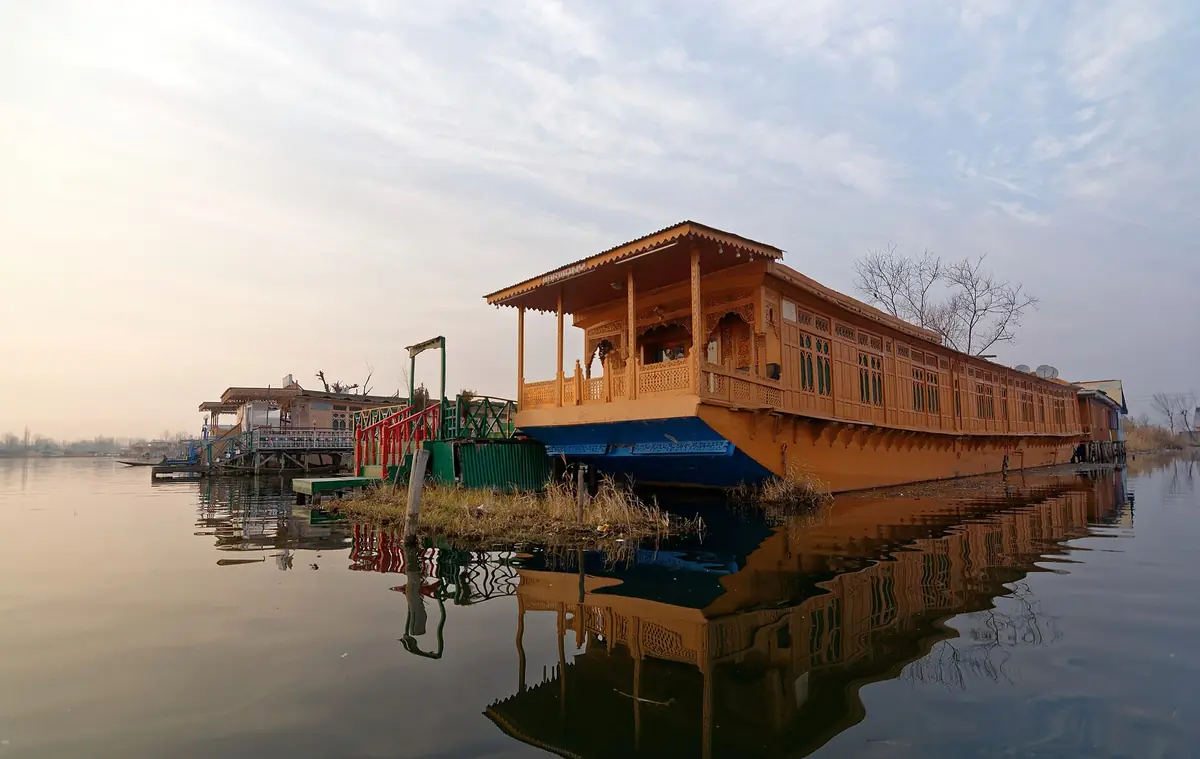 Destination guidePlaces to visit in Srinagar: lakes, gardens and the old cityDal and Nigeen lakes, the Mughal gardens, the old city and what’s closed.
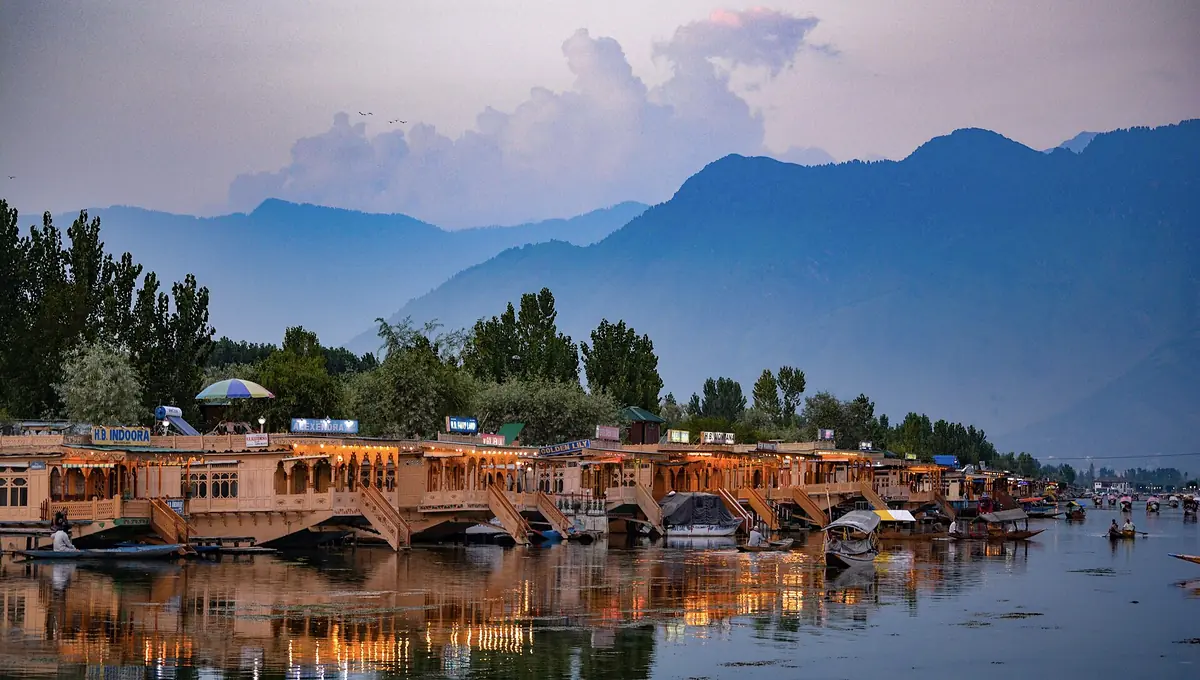 Fares & ticketsSrinagar houseboat prices: categories, published rates and booking safelyThe owners’ association rate card by category, what it includes, and how to book safely.
 PlanningHow many days do you need in Kashmir?What fits in 3, 4, 5, 7 and 10 days, worked out from road times.

